Product Description:
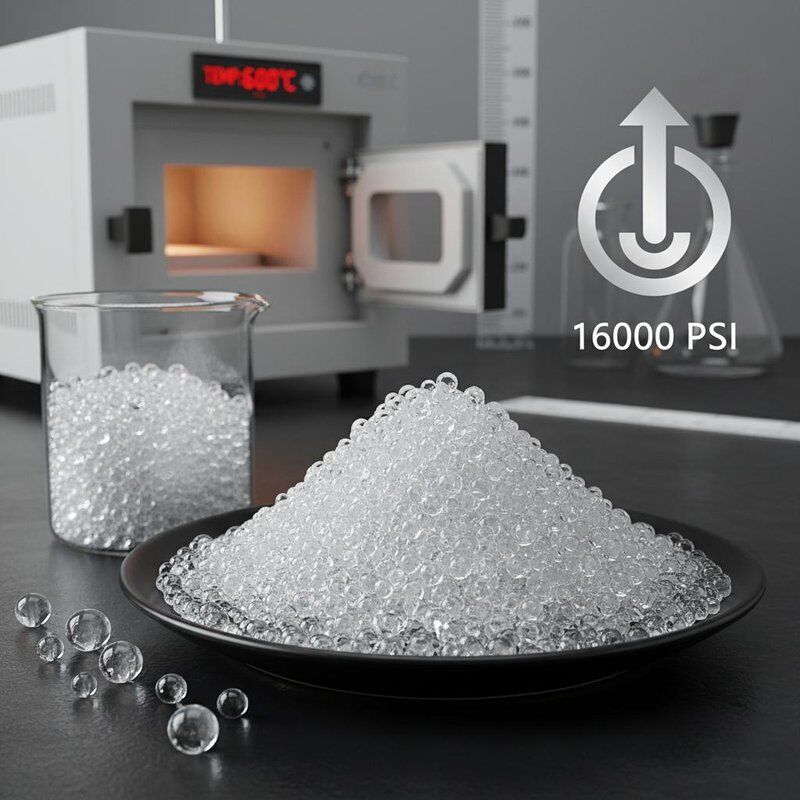
Glass microbubbles are advanced, lightweight hollow spheres primarily composed of glass. These microbubbles possess unique properties that make them an essential component in a wide range of industrial and commercial applications. One of the standout features of glass microbubbles is their exceptional temperature resistance, capable of withstanding temperatures of up to 600°C. This high-temperature tolerance allows them to be used in environments where thermal stability is critical, making them ideal for applications requiring enhanced thermal management.
With a thermal conductivity of just 0.153 W/m·K, glass microbubbles offer excellent insulation properties. This low thermal conductivity helps in reducing heat transfer, making them highly effective in applications where controlling heat flow is vital. By integrating glass microbubbles into composite materials or coatings, manufacturers can significantly improve the thermal performance of their products, effectively enhancing thermal management in various systems.
The optical properties of glass microbubbles are equally impressive. Their highly reflective nature contributes to their ability to reflect and scatter light, which can be leveraged in coatings and paints to improve brightness and reduce heat absorption. This reflectivity not only enhances aesthetic appeal but also contributes to better energy efficiency in products exposed to sunlight or strong lighting conditions.
Glass microbubbles come in a range of diameters, typically from 10 to 55 micrometers (µm). This size variability allows for customization depending on the specific requirements of the application. Smaller diameter bubbles can provide a smoother surface finish when incorporated into paints, coatings, or composite materials, leading to enhanced visual and tactile qualities. The ability to fine-tune the size of the microbubbles ensures that manufacturers can optimize product performance for both functional and aesthetic needs.
The bulk density of glass microbubbles varies depending on the grade selected. This flexibility in density allows for adjustments in weight and volume when the microbubbles are added to formulations. Lower bulk density grades are favored in applications where weight reduction is essential, such as in aerospace, automotive, or marine industries. Conversely, higher density grades may be used where additional strength or specific mechanical properties are required without compromising the lightweight nature of the material.
One of the key benefits of incorporating glass microbubbles into materials is their contribution to producing a smoother surface finish. When added to paints, coatings, or composite materials, these microbubbles help fill voids and create a uniform texture, resulting in a visually appealing and tactilely smooth surface. This property is particularly valuable in industries such as automotive and consumer electronics, where surface quality is paramount.
In summary, glass microbubbles are a versatile and high-performance material that can greatly enhance thermal management due to their low thermal conductivity and high-temperature resistance. Their highly reflective optical properties contribute to energy efficiency and improved aesthetics, while their variable bulk density and diameter options provide manufacturers with the flexibility to tailor products to specific needs. Additionally, the incorporation of glass microbubbles leads to smoother surface finishes, elevating the overall quality and performance of the final product. Whether used in insulation, coatings, composites, or other specialized applications, glass microbubbles offer a unique combination of lightweight, thermal, and optical advantages that are difficult to match with other materials.
Features:
-
Product Name: Glass Microbubbles
-
Bulk Density: Varies depending on grade
-
Optical Properties: Highly reflective
-
Chemical Resistance: Excellent resistance to acids and alkalis
-
Composition: Silica, air, and other trace elements
-
Compressive Strength: 16000 psi
-
Low thermal conductivity to enhance thermal management
-
Designed to improve thermal conductivity in composite materials
Technical Parameters:
|
Product Name
|
Glass Microbubbles
|
|
Appearance
|
White To Off-white Spherical Particles
|
|
Diameter
|
10-55 µm
|
|
Thermal Conductivity
|
0.04 - 0.06 W/m·K
|
|
Thermal Conductivity (Alternate)
|
0.153
|
|
Chemical Resistance
|
Excellent Resistance To Acids And Alkalis
|
|
Surface Area
|
High
|
|
Temperature Resistance
|
Up To 600°C
|
|
Moisture Content
|
<0.5%
|
|
Application
|
Rubber, Ocean, Automobile Vehicle, Adhesive Materials
|
Applications:
The HAINUO Glass Microbubbles, model number HN46HS, are versatile materials designed to meet the demands of various industrial applications. Featuring a high surface area and composed primarily of silica, air, and other trace elements, these white to off-white spherical particles offer exceptional performance characteristics. One of the key benefits of HAINUO HN46HS microbubbles is their ability to provide a smoother surface finish in coatings, composites, and adhesives, making them ideal for applications where surface quality is critical.
Due to their excellent temperature resistance of up to 600°C, HAINUO Glass Microbubbles HN46HS are well-suited for use in high-temperature environments. This makes them an excellent choice for enhancing thermal management in automotive components, aerospace materials, and electronic devices. By incorporating these microbubbles, manufacturers can reduce heat transfer and improve insulation properties without compromising structural integrity.
In the construction industry, these microbubbles are widely used to create lightweight, high-performance concrete and plaster. Their low moisture content of less than 0.5% ensures durability and prevents unwanted reactions with other materials, maintaining the quality and longevity of the finished product. Additionally, their spherical shape helps reduce the weight of composites while maintaining strength, which is particularly beneficial in applications requiring lightweight yet robust materials.
In the realm of marine and automotive coatings, the HAINUO HN46HS microbubbles contribute to superior surface smoothness and enhanced resistance to environmental factors. Their unique composition improves the finish quality by filling micro-voids and reducing surface roughness, resulting in a smoother surface finish that enhances both aesthetics and performance.
Furthermore, these glass microbubbles are utilized in the production of thermal insulation panels, pipelines, and other industrial equipment where enhanced thermal management is crucial. Their ability to withstand high temperatures while maintaining low density and stability makes them indispensable in advanced manufacturing processes.
Overall, the HAINUO Glass Microbubbles HN46HS are ideal for applications demanding improved surface finish, lightweight properties, and superior thermal resistance. Their unique characteristics open up numerous possibilities across industries such as aerospace, automotive, construction, electronics, and coatings, making them a reliable choice for enhancing product performance and efficiency.
Customization:
HAINUO Glass Microbubbles Model Number HN46HS offer exceptional product customization services to meet your specific needs. With a true density ranging from 0.454 to 0.466, these microbubbles are composed of silica, air, and other trace elements, providing a unique combination of lightweight and strength. Their highly reflective optical properties make them ideal for applications requiring enhanced reflectivity.
Our Glass Microbubbles are designed to enhance thermal management by significantly improving thermal conductivity with values between 0.04 - 0.06 W/m·K. This makes them perfect for use in advanced insulation materials and other thermal management solutions. Additionally, incorporating HAINUO Glass Microbubbles into your products can improve mechanical properties, contributing to durability and performance.
We provide tailored solutions to optimize the integration of HN46HS Glass Microbubbles into your formulations, ensuring that the balance between lightweight characteristics, thermal conductivity, and mechanical strength is perfectly suited to your application requirements.
Support and Services:
Our Glass Microbubbles product is supported by a dedicated technical support team committed to ensuring optimal performance and customer satisfaction. We offer comprehensive services including product selection guidance, application assistance, and troubleshooting support to help you integrate Glass Microbubbles effectively into your formulations and processes.
Technical documentation, including datasheets, safety information, and handling guidelines, is available to provide you with all necessary product details. Our experts are available to assist with customized solutions tailored to your specific requirements.
For ongoing support, we provide training sessions and webinars to keep you updated on the latest advancements and best practices related to Glass Microbubbles. Our goal is to help you maximize the benefits of our product and achieve superior results in your applications.
FAQ:
Q1: What are the main applications of HAINUO Glass Microbubbles Model HN46HS?
A1: HAINUO Glass Microbubbles Model HN46HS are primarily used to reduce material density, improve thermal insulation, enhance buoyancy, and increase strength in composites, coatings, adhesives, and lightweight concrete.
Q2: What is the average size and density of the HN46HS Glass Microbubbles?
A2: The HAINUO HN46HS Glass Microbubbles typically have an average diameter ranging from 30 to 60 microns and a very low density, usually around 0.46 g/cm³, making them ideal for lightweight applications.
Q3: Are HAINUO Glass Microbubbles HN46HS chemically inert and compatible with most materials?
A3: Yes, the HN46HS microbubbles are chemically inert, non-toxic, and compatible with most resin systems including epoxy, polyester, and polyurethane, ensuring stable performance in various formulations.
Q4: How should HAINUO Glass Microbubbles HN46HS be stored to maintain their quality?
A4: The microbubbles should be stored in a cool, dry place, away from direct sunlight and moisture, in their original sealed packaging to prevent contamination and maintain optimal performance.
Q5: Can HAINUO HN46HS Glass Microbubbles improve the mechanical properties of composites?
A5: Yes, incorporating HN46HS microbubbles can enhance the strength-to-weight ratio of composites by reducing weight while maintaining or improving mechanical strength and durability.


 Your message must be between 20-3,000 characters!